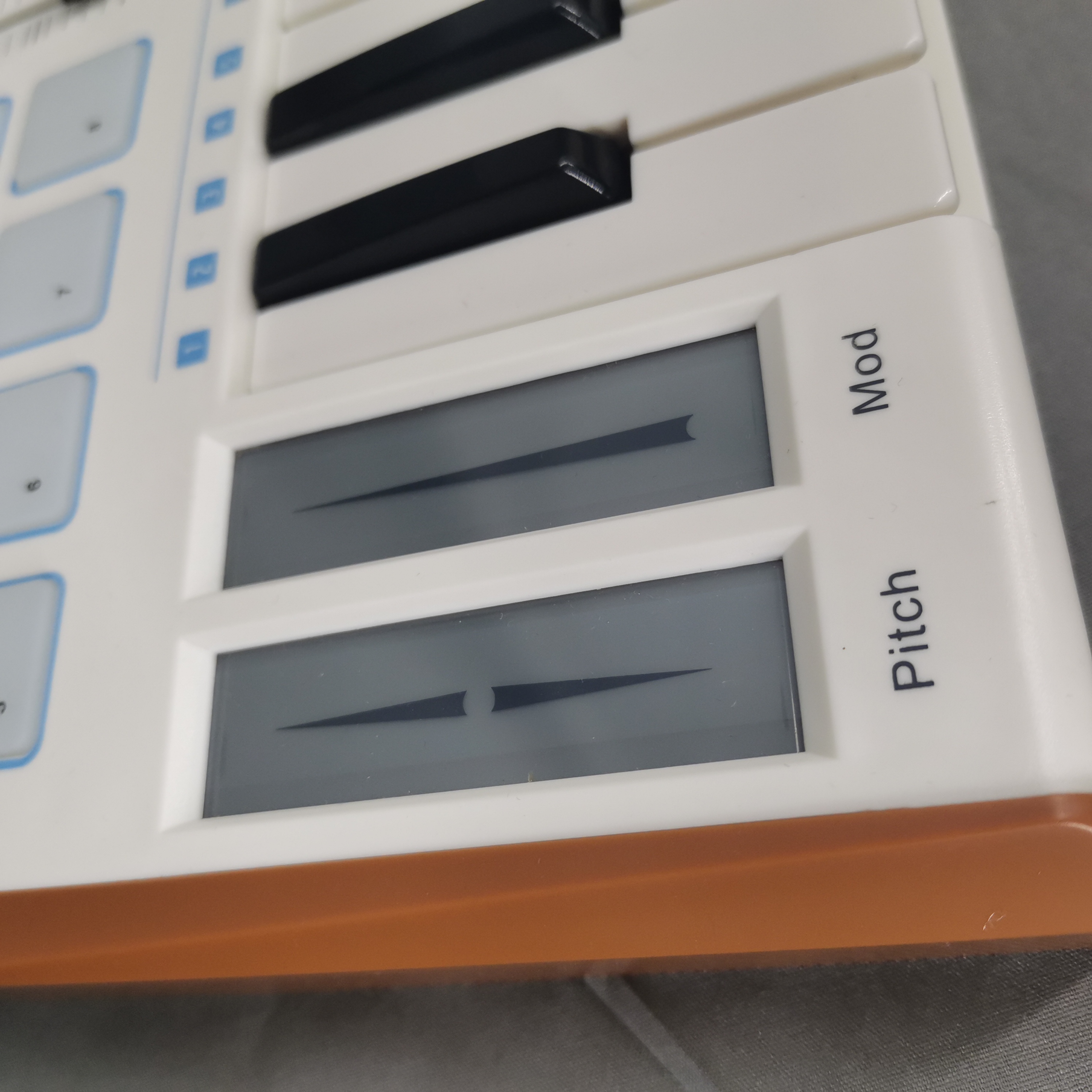
When searching for a MIDI keyboard controller with free shipping, prioritize models that match your production needs in terms of key count, responsiveness, and connectivity. Beginners should consider compact 25-key USB-powered units, while professionals may prefer 49- or 61-key models with aftertouch, assignable knobs, and DAW integration 1. Always verify free shipping eligibility at checkout, as some retailers restrict it by region or order value. Look for brands like Akai, M-Audio, and Novation, known for reliable build and driver support. This guide covers everything from feature evaluation to user feedback insights to help you make an informed decision without overspending.
About MIDI Keyboard Controllers with Free Shipping
A MIDI (Musical Instrument Digital Interface) keyboard controller is an input device used to play, record, and manipulate virtual instruments within digital audio workstations (DAWs) such as Ableton Live, FL Studio, or Logic Pro. Unlike traditional keyboards or synthesizers, MIDI controllers do not produce sound on their own—they transmit performance data (like note pitch, velocity, and modulation) to software or hardware sound modules via USB or MIDI ports 2.
The phrase "MIDI keyboard controller free shipping" refers not to a product category per se, but to a purchasing condition increasingly offered by online retailers—especially Amazon, Sweetwater, and Guitar Center—on select models. This added convenience reduces total cost of ownership and appeals to budget-conscious musicians, hobbyists, and educators looking to expand their setup without hidden delivery fees.
Why MIDI Keyboard Controllers with Free Shipping Are Gaining Popularity
The demand for MIDI keyboard controllers has grown significantly due to the rise of home recording, remote music production, and accessible music software 3. With more people creating music from bedrooms and project studios, portability, ease of setup, and affordability are critical factors. Free shipping enhances this accessibility by eliminating one of the final barriers: unexpected delivery costs.
Additionally, many entry-level producers search specifically for phrases like "affordable MIDI keyboard controller with free shipping" or "best beginner MIDI keyboard with free delivery." Retailers have responded by bundling fast, no-cost shipping—particularly during promotional events like Black Friday or Prime Day—to increase conversion rates and customer satisfaction.
Types and Variants of MIDI Keyboard Controllers
Understanding the different types of MIDI keyboard controllers helps narrow down choices based on intended use, space constraints, and musical goals.
25-Key Compact Controllers
- Pros: Highly portable, often bus-powered via USB, ideal for laptop producers and beatmakers.
- Cons: Limited range; requires octave shifting for full-scale melodies.
- Best For: Mobile producers, electronic music creators using clip-based DAWs.
Models like the Akai MPK Mini series fall into this category and are frequently available with free shipping 4.
49-Key Standard Controllers
- Pros: Four-octave range allows broader melodic expression; often includes pads, faders, and transport controls.
- Cons: Slightly larger footprint; may require external power for advanced features.
- Best For: Intermediate users balancing portability and functionality.
61-Key Full-Sized Controllers
- Pros: Five octaves provide greater playing comfort; commonly found with semi-weighted or weighted keys.
- Cons: Less portable; typically higher price point.
- Best For: Keyboardists transitioning from acoustic pianos or those performing live sets.
88-Key Weighted Action Controllers
- Pros: Mimics piano touch with hammer-action keys; excellent for classical training or expressive piano sampling.
- Cons: Bulky and heavy; usually requires dedicated space and stable desk support.
- Best For: Pianists, composers, and film scorers needing authentic feel.
Key Features and Specifications to Evaluate
When comparing options for a how to choose MIDI keyboard controller with free shipping decision, focus on these technical and ergonomic aspects:
Number of Keys and Key Action
The number of keys affects playability and portability. Key action types include synth-action (light, spring-based), semi-weighted, and fully weighted hammer action. The latter replicates acoustic piano resistance and is preferred for realistic playing dynamics 5.
Aftertouch and Velocity Sensitivity
Virtually all modern controllers offer velocity-sensitive keys (responding to how hard you press). Aftertouch—the ability to modulate sound by pressing harder after initial strike—is less common and mostly found in mid-to-high-end models. It's useful for vibrato or filter sweeps in synth patches.
Knobs, Faders, and Pads
Assignable controls enhance workflow. Look for at least 8 velocity-sensitive pads for drum programming and 8+ rotary encoders or knobs for real-time parameter tweaking. Some models include touch strips or XY pads for modulation effects.
Connectivity Options
USB-MIDI is standard for computer connection. However, some professional models also offer traditional 5-pin DIN MIDI ports for connecting external synths or hardware. Sustain pedal inputs and expression pedal jacks add versatility.
DAW Integration and Presets
Many controllers come pre-mapped to major DAWs (e.g., Ableton, Cubase, Pro Tools). Check if the model supports custom mapping or comes with editor software for personalized layouts.
Build Quality and Portability
Plastic chassis units are lighter and cheaper but may lack durability. Metal-reinforced frames offer better longevity, especially important for touring musicians. Consider weight and included carrying cases when evaluating mobility.
Pros and Cons of Buying a MIDI Keyboard Controller with Free Shipping
Advantages
- Cost Savings: Eliminates $10–$30 shipping fees, improving overall value.
- Faster Delivery: Often eligible for expedited shipping through major platforms.
- Better Accessibility: Lowers entry barrier for students and international buyers near border regions.
Disadvantages
- Regional Restrictions: Free shipping may only apply to certain countries or states.
- Return Shipping Costs: Even with free inbound shipping, return fees might still apply if you're dissatisfied.
- Limited Model Selection: Not all configurations or brands qualify for free delivery promotions.
How to Choose a MIDI Keyboard Controller with Free Shipping
Follow this step-by-step guide to ensure you select the right model under favorable shipping terms:
- Define Your Use Case: Are you making beats, composing orchestral music, or performing live? Match your primary activity to appropriate key count and control layout.
- Determine Budget Range: Entry-level models start around $80; high-end units exceed $500. Set a ceiling before browsing.
- Check Retailer Policies: Verify whether free shipping applies automatically or requires a minimum purchase. Some sites offer it only on Prime-eligible items or with student discounts.
- Compare Key Features: Prioritize must-haves: number of pads, encoder count, aftertouch, pedal support.
- Read User Reviews: Focus on long-term reliability, driver stability, and build quality complaints.
- Confirm Compatibility: Ensure the controller works with your OS (Windows/macOS/iOS) and preferred DAW.
- Watch for Red Flags: Avoid sellers with inconsistent stock, poor customer service ratings, or missing warranty information.
Price & Market Insights
The average price for a new MIDI keyboard controller ranges from $70 to $400, depending on size and feature set 6. Here’s a breakdown by tier:
- Entry-Level ($70–$120): 25–49 keys, basic pads/knobs, USB-powered. Commonly includes free shipping.
- Mid-Tier ($130–$250): 49–61 keys, improved key action, more controls, DAW integration. Frequently discounted with bundled software.
- Premium ($260+): 88 keys, weighted action, extensive programmability, premium materials. Free shipping less common unless part of bundle.
Value seekers should watch for seasonal sales or educational bundles that include free plugins or courses along with waived shipping.
| Model | Keys | Pads | Controls | Free Shipping Eligibility |
|---|---|---|---|---|
| Akai MPK Mini MkIII | 25 | 16 | 8 knobs, 8 faders | Yes (Amazon, Sweetwater) |
| M-Audio Keystation 49 | 49 | None | Transport buttons | Yes (Guitar Center, B&H) |
| Novation Launch Key 61 | 61 | 16 RGB | 8 rotary knobs | Yes (with qualifying orders) |
| Alesis V88 | 88 | 8 | 4 knobs, 4 switches | Sometimes (seasonal promo) |
Customer Feedback Synthesis
An analysis of thousands of verified buyer reviews across platforms reveals consistent patterns:
Common Praises
- “Perfect for FL Studio beat-making” – compact size and responsive pads praised in 25-key models.
- “Plug-and-play with MacBook” – ease of setup without drivers highlighted frequently.
- “Great value for the price” – especially noted in M-Audio and Nektar models with included software.
Recurring Complaints
- “Pads are too stiff” – some users report uneven pad sensitivity on budget units.
- “Cheap plastic feels fragile” – durability concerns arise with ultra-lightweight designs.
- “Shipping wasn’t actually free” – occasional confusion over threshold requirements or regional exclusions.
Sourcing & Supplier Tips
To maximize savings and reliability:
- Buy from authorized dealers to ensure warranty validity.
- Use price-tracking tools like CamelCamelCamel (for Amazon) to catch drops.
- Consider refurbished units from reputable sources—they often include free shipping and carry warranties.
- For bulk purchases (e.g., schools), contact manufacturers directly for institutional pricing and freight options.
Maintenance, Safety & Legal Considerations
MIDI controllers require minimal maintenance. Keep them dust-free with a soft cloth and avoid liquid exposure. Store in dry environments to prevent circuit damage.
No significant safety hazards exist, but ensure cables are undamaged to prevent electrical issues. When using sustain pedals, check polarity compatibility to avoid malfunction.
Legally, MIDI controllers are classified as electronic musical instruments. Import duties may apply outside the U.S., even if shipping is labeled “free.” Always review customs policies in your country before ordering internationally.
Conclusion
Selecting the best MIDI keyboard controller with free shipping involves balancing performance needs, physical design, and logistical benefits. For beginners, compact 25- or 49-key models from trusted brands like Akai or M-Audio offer excellent starting points with widely available free shipping. Professionals seeking expressive control should invest in 61- or 88-key variants, checking for temporary promotions that waive delivery costs. By focusing on key specifications, reading verified reviews, and verifying retailer terms, you can secure a capable controller without paying extra for delivery.
FAQs
- Does 'free shipping' always mean no additional costs?
- No. Some retailers offer free shipping but charge import fees or taxes upon delivery, especially outside the U.S. Always confirm landed cost before purchasing 7.
- Can I use a MIDI keyboard controller with an iPad?
- Yes, most modern USB-MIDI controllers work with iOS devices using a Camera Connection Kit or USB-C adapter. Verify compatibility with your specific DAW app.
- Are there any hidden drawbacks to choosing a model just because it has free shipping?
- Potentially. Prioritizing shipping over specs may lead to suboptimal key action or missing controls. Always evaluate functionality first.
- Do all retailers offer free shipping on MIDI controllers?
- No. Availability varies by region, retailer, and order size. Major platforms like Sweetwater and Amazon tend to offer it more consistently than small shops.
- How can I tell if a MIDI controller will work with my DAW?
- Check the manufacturer’s website for official DAW templates or community forums for user-created mappings. Most mainstream models support Ableton, Logic, and FL Studio out of the box.




 浙公网安备
33010002000092号
浙公网安备
33010002000092号 浙B2-20120091-4